

Recycling Regulations Aim to Reduce Unnecessary Disposal
, by Planet Green, 5 min reading time
, by Planet Green, 5 min reading time
For decades, disposal was treated as an acceptable conclusion to a product’s life. If something could not be easily reused or recycled, it was landfilled with little scrutiny. Recycling regulations are steadily overturning that logic. Their central purpose is not simply to promote recycling, but to reduce unnecessary disposal altogether—especially when materials still hold recoverable value.
This shift reflects a deeper change in how waste is understood: disposal is no longer viewed as neutral or inevitable, but as an outcome that must be justified.
Modern recycling regulations increasingly frame disposal as evidence of system inefficiency rather than operational success. When materials that could be reused, remanufactured, or recovered are landfilled, regulators now see that outcome as avoidable loss.
This reframing is critical. It moves policy away from managing waste volumes toward questioning why waste exists in the first place. Recycling regulations are becoming tools to interrupt the automatic flow of materials into landfills and redirect them into higher-value pathways.
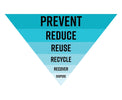
Most contemporary recycling regulations are built around a hierarchy of outcomes. While the language varies by region, the intent is consistent:
By codifying this hierarchy, regulations make it clear that disposal is not equivalent to other outcomes. It is the least preferred option, reserved for materials that truly cannot be recovered responsibly.
As recycling regulations mature, disposal outcomes are increasingly examined rather than accepted. Policymakers are asking harder questions:
When disposal becomes routine for recoverable materials, it signals a policy gap - or a design problem upstream. Regulations aimed at reducing unnecessary disposal attempt to close that gap by making recovery the expected outcome, not the exception.
Recycling regulations often work in tandem with economic levers to discourage unnecessary disposal. These include higher landfill fees, disposal restrictions, and reporting requirements that expose landfill dependency.
When disposal becomes more expensive or more visible, organizations are incentivized to seek alternatives. Recovery pathways that once appeared marginal become economically viable, aligning financial incentives with regulatory goals.
This alignment is essential. Regulations reduce unnecessary disposal not through prohibition alone, but by reshaping the economics that previously favored it.
One of the most persistent problems in waste systems is leakage - materials collected for recycling that are ultimately landfilled due to contamination, lack of processing capacity, or weak oversight.
Recycling regulations aim to reduce this leakage by:
These measures ensure that disposal does not quietly replace recovery when systems are under strain.
Reducing unnecessary disposal is not only about waste handling—it is about product design. Recycling regulations increasingly recognize that disposal-heavy outcomes often originate upstream, long before a product reaches the waste stream.
As a result, policy is increasingly linking disposal reduction to:
When products are designed to defeat recovery, disposal becomes inevitable. Regulations that address design help prevent that outcome before it occurs.
Some regions have moved more aggressively than others in redefining disposal as an undesirable outcome.
The European Union has been particularly influential in embedding disposal reduction into recycling frameworks by prioritizing recovery, limiting landfill use, and tying product responsibility to end-of-life outcomes. These policies signal that disposal is not merely a local waste issue, but a systemic inefficiency to be corrected.
As global supply chains respond to these signals, expectations around disposal are shifting well beyond regional borders.
Public trust in recycling systems has been weakened by the perception that materials are collected but still discarded. Recycling regulations aimed at reducing unnecessary disposal help restore credibility by aligning participation with outcomes.
When disposal is minimized and recovery is demonstrable:
This trust is essential for long-term waste reduction efforts.
Disposal-heavy systems become more complex and costly over time. Landfills require monitoring, expansion, and long-term environmental management. Recycling regulations that reduce unnecessary disposal ease this burden by shrinking the volume of material requiring permanent containment.
In doing so, they support:
Disposal reduction is not just environmentally beneficial—it is structurally pragmatic.
Perhaps most importantly, recycling regulations that target unnecessary disposal signal where waste systems are headed. They indicate a future in which materials are expected to retain value beyond first use, and disposal is treated as a breakdown in design or policy rather than an acceptable endpoint.
As these regulations continue to evolve, they reinforce a clear message: burying recoverable materials is no longer compatible with responsible resource management.
In that future, recycling regulations do not merely manage waste - they redefine success by how little is permanently thrown away.
Support ink cartridge recycling and recycle your ink cartridges free at Planet Green Recycle here: INK CARTRIDGE RECYCLING

“Made in the USA” is a powerful phrase. For many buyers, it suggests domestic manufacturing, American jobs, shorter supply chains, and confidence in how a...

A printer cartridge may seem like a simple office supply. It is purchased, installed, used, replaced, and often forgotten. But behind every cartridge is a...

Recycling is important, but it is not always the highest-value environmental outcome. For many products, the better question is not simply, “Can this be recycled?”...

Not every empty printer cartridge can become a remanufactured cartridge. That surprises many consumers. If two cartridges fit the same printer, why can one often...