

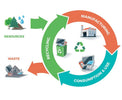
Recycling Turns Discarded Items Into Usable Resources
, by Planet Green, 2 min reading time
, by Planet Green, 2 min reading time
In a traditional waste system, discarded items reach a dead end. Once thrown away, their value is lost and their environmental impact begins to grow. Recycling programs exist to change that outcome. Instead of treating used products as trash, recycling transforms them into usable resources that can re-enter the economy.
Ink cartridges are a clear example of how this transformation works.
A discarded item is only waste if the system treats it that way. Recycling redefines the role of used products by recovering materials that still have functional value.
Through recycling:
What would have been permanent waste becomes input for future use.
Many modern products—ink cartridges included—are made from high-grade plastics and engineered components designed to last. Discarding them after one use wastes that durability.
Recycling programs capture:
Turning these items into resources reduces both waste and the need to start over with new materials.
Manufacturing consumes resources only once—but recycling allows those same resources to deliver value multiple times.
Each recycled item:
The value of the material doesn’t end when the product’s first use does.
When discarded items are recovered instead of buried:
Recycling doesn’t eliminate consumption, but it makes consumption more efficient by extracting more use from what already exists.
Recycling programs are one of the most accessible tools for building a circular economy. They create a bridge between use and reuse, ensuring materials don’t exit the system after a single cycle.
For everyday products like ink cartridges, this bridge is especially important. It turns routine disposal moments into opportunities for recovery.
Discarded items don’t have to be the end of the line. Recycling programs prove that waste is often a design and behavior choice, not an inevitability.
By turning discarded items into usable resources, recycling replaces permanent loss with continued value—and shifts the system from one built on disposal to one built on recovery.
That shift is small at the individual level, but powerful at scale.

“Made in the USA” is a powerful phrase. For many buyers, it suggests domestic manufacturing, American jobs, shorter supply chains, and confidence in how a...

A printer cartridge may seem like a simple office supply. It is purchased, installed, used, replaced, and often forgotten. But behind every cartridge is a...

Recycling is important, but it is not always the highest-value environmental outcome. For many products, the better question is not simply, “Can this be recycled?”...

Not every empty printer cartridge can become a remanufactured cartridge. That surprises many consumers. If two cartridges fit the same printer, why can one often...