

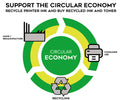
The Circular Economy: A Key to Combating Environmental Waste
, by Planet Green, 2 min reading time
, by Planet Green, 2 min reading time
The concept of a circular economy is simple but transformative: instead of following the traditional "take, make, waste" model, we design systems that reuse, repair, remanufacture, and recycle materials, keeping them in circulation for as long as possible. This approach minimizes waste, conserves resources, and reduces environmental harm—making it a crucial strategy in the fight against global waste.
Ink Cartridges: A Case Study in Waste
Ink cartridges exemplify the pitfalls of the traditional linear economy. Millions of cartridges are discarded annually, many ending up in landfills where they take centuries to break down. Most of these are single-use imports that are designed to fail after one cycle. The result is a mountain of plastic waste, toxic ink leakage, and the loss of valuable resources.
Embracing the Circular Economy
A circular economy reimagines this wasteful cycle. By remanufacturing used cartridges, we recover valuable materials and significantly reduce the need for new manufacturing. This not only prevents waste but also saves energy and reduces the environmental footprint of the entire lifecycle of a product.
Planet Green Recycle is putting this philosophy into action. By remanufacturing used OEM ink cartridges, they divert millions of them from landfills annually. Their efforts demonstrate how a commitment to circular practices can create a sustainable alternative to the linear model.

The Role of Consumers and Businesses
A successful circular economy requires participation from everyone—individuals, businesses, and policymakers. Here’s how each can contribute:
Why It Matters
Transitioning to a circular economy isn't just about saving resources—it’s about creating a more sustainable future. It reduces pollution, conserves energy, and promotes economic growth by fostering industries like remanufacturing.
By choosing circular practices, we can turn today’s waste into tomorrow’s resources and ensure that our planet remains livable for future generations.
Take Action
The time to act is now. Start by supporting recycling, like Planet Green Recycle’s programs, which make it easy for individuals and organizations to embrace the circular economy. Together, we can break the cycle of waste and build a more sustainable future.

“Made in the USA” is a powerful phrase. For many buyers, it suggests domestic manufacturing, American jobs, shorter supply chains, and confidence in how a...

A printer cartridge may seem like a simple office supply. It is purchased, installed, used, replaced, and often forgotten. But behind every cartridge is a...

Recycling is important, but it is not always the highest-value environmental outcome. For many products, the better question is not simply, “Can this be recycled?”...

Not every empty printer cartridge can become a remanufactured cartridge. That surprises many consumers. If two cartridges fit the same printer, why can one often...