

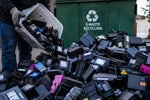
Why Single-Use Printer Cartridges Are Becoming a Public Waste Issue
, by Planet Green, 5 min reading time
, by Planet Green, 5 min reading time
For decades, printer cartridges have been viewed as disposable office supplies. A cartridge runs empty, a replacement is installed, and the old one is often thrown away without a second thought. Today, that mindset is beginning to change.
Across the United States, policymakers are placing greater emphasis on reducing waste, encouraging reuse, and extending the life of manufactured products. Printer cartridges have become part of that conversation because they represent a product that can often be reused, remanufactured, or recycled instead of discarded.
One example is the City of Los Angeles, where officials have proposed restrictions on the sale and distribution of certain single-use printer cartridges that cannot be refilled, remanufactured, reused, or recovered through an approved take-back or recycling program. The proposal is part of the city's broader effort to reduce waste and encourage a more circular economy. (cite: Los Angeles Bureau of Sanitation, Single-Use Printer Cartridge Ordinance Proposal)
What Is a Single-Use Printer Cartridge?
Not every printer cartridge is designed the same way.
Some cartridges are manufactured with reuse in mind. Once empty, they can be collected, professionally remanufactured, tested, and returned to service.
Others are effectively designed for a single life cycle. After one use, they are discarded because they cannot be economically rebuilt or because no recovery program exists for them.
From a waste management perspective, that distinction is becoming increasingly important.
Unlike ordinary plastic packaging, printer cartridges often contain engineered plastics, metal components, electronic circuitry, foam, rubber seals, springs, and residual ink or toner. These materials require specialized processing if they are to be recovered rather than sent to a landfill.
Why Cities Are Paying Attention
Municipal governments across the country are facing increasing pressure to reduce landfill waste and improve recycling rates.
While much public attention focuses on plastic bags, food containers, and beverage bottles, office products also contribute to the waste stream.
Printer cartridges are particularly noteworthy because many already have an established reuse pathway.
Rather than manufacturing an entirely new cartridge every time one becomes empty, an original OEM cartridge can often be professionally rebuilt and returned to service multiple times. This process conserves materials while reducing the demand for newly manufactured replacement cartridges.
Public agencies are increasingly recognizing that extending a product's useful life is often more environmentally beneficial than simply recycling it after disposal.
Remanufacturing Supports a Circular Economy
Recycling is an important step, but remanufacturing goes further.
Instead of breaking products down into raw materials, remanufacturing preserves much of the original product by replacing worn components, refilling the ink or toner, performing quality testing, and returning the cartridge to use.
This approach keeps valuable materials in circulation longer while reducing the energy and raw materials needed to manufacture an entirely new product.
The concept aligns with the principles of a circular economy, which seeks to minimize waste by keeping products and materials in use for as long as practical.
For printer cartridges, that means every successful remanufacturing cycle helps delay disposal while extracting additional value from the original OEM cartridge.
Why It Matters to Businesses
For businesses, choosing remanufactured cartridges is not simply an environmental decision.
It can also reduce operating expenses.
Professionally remanufactured cartridges are often available at substantially lower prices than new OEM products while providing comparable page yields and performance when manufactured under rigorous quality standards.
Many organizations are also strengthening their sustainability initiatives and environmental reporting. Purchasing remanufactured office supplies can support waste reduction goals without requiring new equipment or changes to existing workflows.
Supporting American Manufacturing
Another factor receiving increased attention is domestic manufacturing.
Over the past two decades, much of the world's printer cartridge production has shifted overseas. At the same time, the number of U.S. remanufacturing facilities has declined dramatically.
Purchasing products that are remanufactured in the United States helps support American manufacturing jobs, domestic recycling infrastructure, and local businesses that continue investing in reuse rather than disposal.
Keeping more of the manufacturing process within the United States also helps strengthen domestic supply chains while keeping more purchasing dollars circulating within the American economy.
Looking Ahead
Waste reduction policies continue to evolve at the local, state, and federal levels.
While individual regulations vary, the overall direction is becoming increasingly clear: products designed for reuse, repair, and remanufacturing are receiving greater attention as governments look for practical ways to reduce waste without sacrificing performance.
Printer cartridges represent one product category where businesses already have established alternatives to disposable products.
A Practical Choice
Since 1999, Planet Green Recycle has focused on extending the life of original OEM printer cartridges through collection, recycling, and U.S.-based remanufacturing. The company also offers genuine OEM surplus cartridges that provide customers with new, unused OEM products at reduced prices.
Whether driven by cost savings, sustainability goals, or support for American manufacturing, businesses today have more options than simply purchasing another disposable cartridge.
As conversations around waste reduction continue to grow, choosing remanufactured and reusable products is becoming not only an environmentally responsible decision but an increasingly practical business one.
Sources
Los Angeles Bureau of Sanitation. Proposed Single-Use Printer Cartridge Ordinance.
(cite: https://sanitation.lacity.gov/san/faces/home/portal/s-lsh-wwd/s-lsh-wwd-s/s-lsh-wwd-s-sr/s-lsh-wwd-s-sr-supcb)
U.S. Environmental Protection Agency. Sustainable Materials Management and Circular Economy resources.
(cite: https://www.epa.gov/smm)

“Made in the USA” is a powerful phrase. For many buyers, it suggests domestic manufacturing, American jobs, shorter supply chains, and confidence in how a...

A printer cartridge may seem like a simple office supply. It is purchased, installed, used, replaced, and often forgotten. But behind every cartridge is a...

Recycling is important, but it is not always the highest-value environmental outcome. For many products, the better question is not simply, “Can this be recycled?”...

Not every empty printer cartridge can become a remanufactured cartridge. That surprises many consumers. If two cartridges fit the same printer, why can one often...